
Dichosity Meaning, Examples, Uses, and Benefits Guide
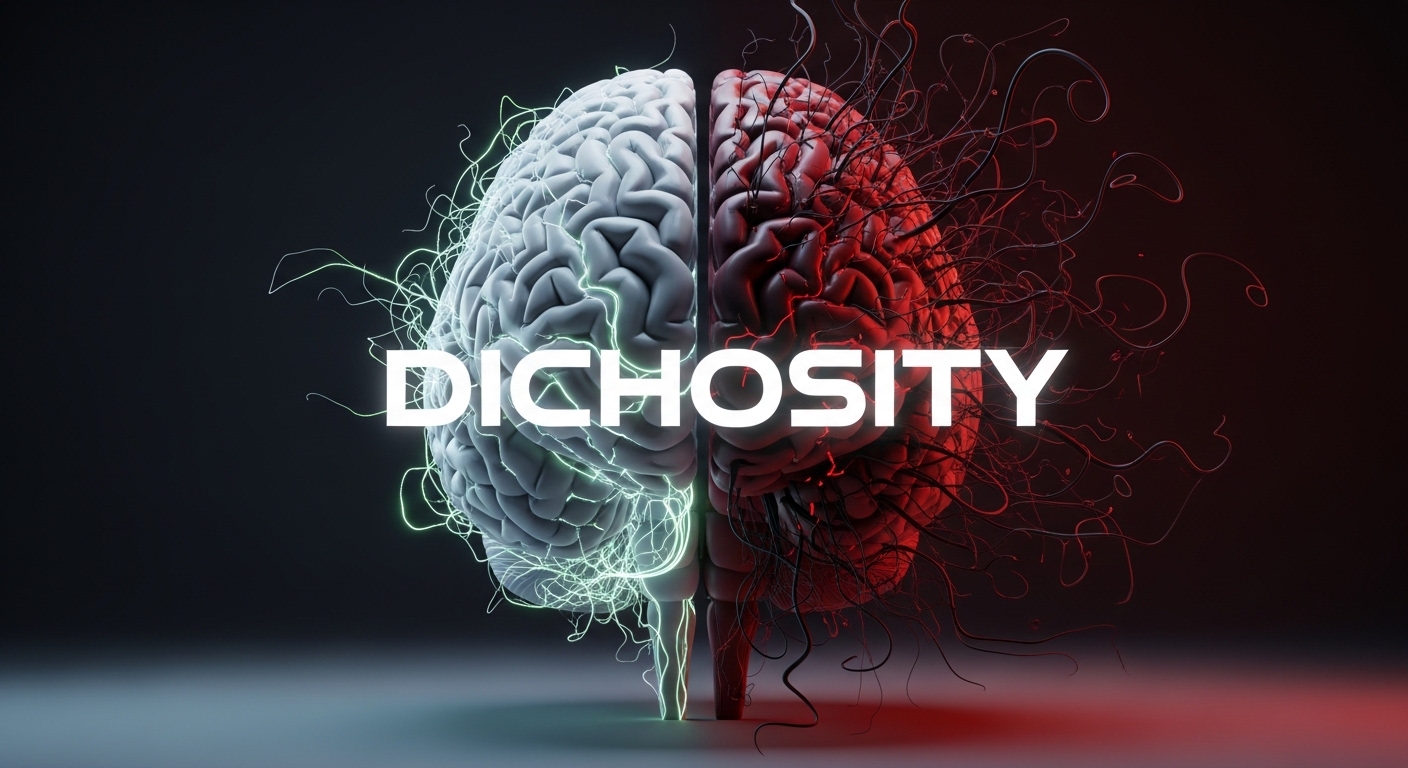
Have you ever noticed how people often explain the world by separating things into two clear sides—good and bad, success and failure, logic and emotion, right and wrong? This way of thinking helps people organize complex ideas into simple categories. That concept is often described through dichosity, a term referring to dividing something into two distinct or contrasting parts. While the word may be less common than similar terms, the idea behind it is powerful and widely used in psychology, philosophy, communication, science, and everyday decision-making.
Understanding dichosity can improve how we analyze arguments, interpret social behavior, solve problems, and communicate more clearly. It can simplify complex topics, but it can also create oversimplified thinking if used carelessly. That is why learning about dichosity matters in modern life.
This complete guide explores the meaning of dichosity, practical examples, benefits, limitations, and how it influences human thought, language, education, business, and relationships.
What Is Dichosity?
Dichosity refers to the process of dividing something into two separate, contrasting, or distinct categories. It is a method of classification that helps people understand ideas, systems, or concepts by breaking them into opposite or different parts. For example, hot versus cold, day versus night, and introvert versus extrovert all reflect dichosity.
At its core, dichosity helps simplify information. Human minds naturally look for patterns and categories, and dividing concepts into two groups often makes complex subjects easier to understand. This is why dichosity appears in education, debates, decision-making, and problem-solving.
However, dichosity does not always mean complete opposition. Sometimes the two parts are complementary rather than conflicting. For instance, theory and practice are different, yet both are essential. This shows that dichosity can represent contrast, balance, or structure depending on context.
Origin and Linguistic Understanding of Dichosity
The idea of dichosity is closely connected to words like dichotomy, duality, binary division, and contrast-based categorization. Though the exact term may be uncommon in mainstream dictionaries, it reflects a broader intellectual concept recognized across many disciplines.
Language often depends on dichosity because humans explain meanings through opposites. We understand light by comparing it to darkness, noise by comparing it to silence, and movement by comparing it to stillness. This makes dichosity an important part of communication and cognitive development.
Writers, speakers, and educators frequently use two-part distinctions because they are memorable. Presenting ideas as paired opposites helps audiences absorb information quickly. This is why many speeches, books, and teachings rely on contrasting themes.
Why Dichosity Is Important in Human Thinking
The human brain naturally organizes information into manageable groups. Dichosity supports this mental process by reducing complexity. Instead of handling dozens of possibilities at once, people often begin by identifying two major categories.
For example, when making choices, people may think in terms of safe versus risky, urgent versus non-urgent, or beneficial versus harmful. This can speed up decisions and improve clarity, especially under pressure.
Yet while dichosity is efficient, it can also become limiting if people ignore nuance. Real life often exists on a spectrum rather than in two rigid boxes. Therefore, dichosity is most useful as a starting point for understanding, not always the final conclusion.
Common Examples of Dichosity in Daily Life
Dichosity appears everywhere, often without people noticing it. Everyday language and decisions frequently rely on two-part divisions.
Examples of Dichosity
| Situation | Two-Part Division |
|---|---|
| Weather | Hot / Cold |
| Time | Past / Future |
| Mood | Happy / Sad |
| Work Style | Productive / Unproductive |
| Decisions | Yes / No |
These examples show how people use dichosity to simplify experiences. It helps create fast mental models for interpreting the world.
In relationships, people may think trust versus distrust. In fitness, healthy versus unhealthy habits. In finance, saving versus spending. These patterns shape choices constantly.
Dichosity in Psychology
Psychology studies how people think, feel, and behave, making dichosity highly relevant. Many emotional and cognitive patterns involve binary thinking. A person might view themselves as a success or failure, loved or rejected, strong or weak.
This kind of rigid dichosity is sometimes called black-and-white thinking. It can create stress because reality is usually more balanced. Someone may experience partial success, mixed emotions, or gradual progress rather than extremes.
Therapists often help people move beyond unhealthy dichosity by recognizing middle ground. Instead of “I failed completely,” a healthier view may be “I made mistakes but also learned valuable lessons.” This shift improves resilience and self-awareness.
Dichosity in Philosophy and Logic
Philosophy often uses dichosity to examine reality, ethics, and truth. Thinkers explore contrasts such as mind versus body, freedom versus control, reason versus emotion, and appearance versus reality.
These paired ideas help structure debates. Philosophers use contrasting categories to ask deeper questions about existence and morality. Is truth absolute or relative? Is human behavior driven by logic or desire? Such questions often begin with dichosity.
In logic, dividing claims into true or false can clarify arguments. But advanced reasoning also recognizes uncertainty, probability, and complexity. Therefore, dichosity can initiate inquiry while broader logic completes it.
Dichosity in Education and Learning
Teachers frequently use dichosity because it helps students grasp concepts quickly. Comparing two related ideas side by side improves retention and understanding.
Examples include:
- Fiction vs nonfiction
- Renewable vs nonrenewable energy
- Democracy vs dictatorship
- Vertebrates vs invertebrates
- Positive vs negative numbers
These contrasts help learners recognize defining characteristics. Once students understand the basic division, they can explore deeper layers and exceptions.
Dichosity is especially effective in early education because clear categories reduce confusion and build foundational knowledge.
Dichosity in Business and Marketing
Business strategy often depends on comparative thinking. Companies divide markets, products, and customer behavior into clear groups for decision-making.
Business Uses of Dichosity
| Area | Common Division |
|---|---|
| Customers | New / Returning |
| Pricing | Premium / Budget |
| Marketing | Online / Offline |
| Products | Essential / Luxury |
| Work Model | Remote / On-site |
These divisions help organizations allocate resources efficiently. A company may design separate campaigns for new customers and loyal customers, or premium users and budget buyers.
Still, modern businesses increasingly recognize mixed categories. Customers can be both price-sensitive and quality-focused, showing the limits of oversimplified dichosity.
Dichosity in Science and Research
Science often begins with classification, making dichosity useful in observation and hypothesis building. Researchers may separate variables into categories like living versus non-living, solid versus liquid, natural versus synthetic, or dependent versus independent variables.
These distinctions provide structure for experiments and analysis. Without categories, data becomes harder to interpret.
However, science also reveals that many boundaries are fluid. For example, some materials behave as both liquid and solid under certain conditions. This reminds us that dichosity is useful but not always absolute.
Dichosity in Communication
Strong communication often uses contrast. Speakers compare before and after, problem and solution, risk and reward, challenge and opportunity. This form of dichosity helps messages feel clear and persuasive.
Advertisers commonly frame products using two choices: ordinary versus premium, slow versus fast, outdated versus modern. Political messaging also uses contrasting narratives to influence perception.
Because dichosity is memorable, communicators use it strategically. But ethical communication avoids false choices that ignore other possibilities.
Benefits of Using Dichosity
Dichosity can be highly practical when used correctly. It creates order from confusion and supports faster understanding.
Major Benefits
- Simplifies complex topics
- Speeds decision-making
- Improves teaching clarity
- Enhances comparisons
- Supports structured thinking
- Makes communication memorable
When someone faces too much information, dichosity can create a starting framework. This is especially useful in planning, management, and learning environments.
The key benefit is clarity. Two-part distinctions reduce mental overload and help people act with greater confidence.
Risks and Limitations of Dichosity
Despite its usefulness, dichosity can become harmful when applied too rigidly. Real life is rarely limited to only two options.
For example, thinking someone is either friend or enemy ignores neutral or evolving relationships. Viewing performance as success or failure ignores learning progress and partial wins.
Common Risks
| Risk | Example |
|---|---|
| Oversimplification | Complex issues reduced too much |
| Polarization | People forced into sides |
| Misjudgment | Ignoring nuance |
| Stress | Perfectionist thinking |
Healthy thinking uses dichosity carefully while remaining open to shades of gray.
Dichosity in Social and Cultural Discussions
Societies often frame issues through contrasting groups such as traditional versus modern, local versus global, freedom versus security, or individualism versus collectivism.
These divisions can help identify values and priorities. However, they can also deepen conflict when people assume one side must defeat the other.
Most cultures contain blended identities and evolving beliefs. Therefore, dichosity may explain social tensions but should not erase complexity.
Constructive dialogue recognizes both differences and overlap.
How to Use Dichosity Wisely
The smartest way to use dichosity is as a tool, not a trap. Use two-part categories for clarity, then ask whether additional layers exist.
For example, if choosing a job, start with stable versus risky. Then add other factors like growth, values, flexibility, and location. This combines simplicity with realism.
Good thinkers know when binary categories help and when they limit understanding. Flexibility is more powerful than rigid labels.
Dichosity vs Dichotomy vs Duality
Many people confuse these related terms. While connected, they can differ slightly in usage.
Comparison Table
| Term | Meaning |
|---|---|
| Dichosity | Division into two contrasting parts |
| Dichotomy | Formal split into two mutually exclusive groups |
| Duality | Two aspects existing together |
Dichotomy is more common in academic writing. Duality often implies coexistence, such as strength and vulnerability in one person. Dichosity broadly reflects two-part division and contrast.
Understanding these distinctions improves vocabulary precision.
Future Relevance of Dichosity in the Digital Age
Modern life creates information overload, making simplified frameworks more attractive than ever. Algorithms, marketing funnels, user choices, and content strategies often rely on two-part segmentation.
Examples include subscribed versus unsubscribed users, active versus inactive accounts, safe versus unsafe content, and buyer versus browser audiences.
At the same time, digital society increasingly values personalization. This means future systems will need to balance dichosity with nuanced data analysis.
The most effective models will combine clear categories with flexible human understanding.
Conclusion
Dichosity is the practice of dividing ideas, systems, or experiences into two distinct or contrasting parts. It plays a major role in psychology, education, business, science, communication, and daily decision-making. By simplifying complex topics, dichosity helps people think faster and understand more clearly.
However, life is often more nuanced than two boxes. The wisest use of dichosity is to create initial clarity while remaining open to complexity. When balanced correctly, it becomes a powerful tool for better thinking, stronger communication, and smarter choices.
FAQs
What does dichosity mean?
Dichosity refers to dividing something into two distinct, contrasting, or separate parts.
Is dichosity the same as dichotomy?
They are closely related. Dichotomy is the more formal and commonly used term, while dichosity reflects a similar two-part division concept.
Where is dichosity used?
It is used in psychology, philosophy, education, business, science, and everyday decision-making.
Can dichosity be harmful?
Yes, if it creates oversimplified black-and-white thinking or ignores nuance.
How can I use dichosity effectively?
Use it for clarity and organization, but always consider whether additional perspectives exist.


